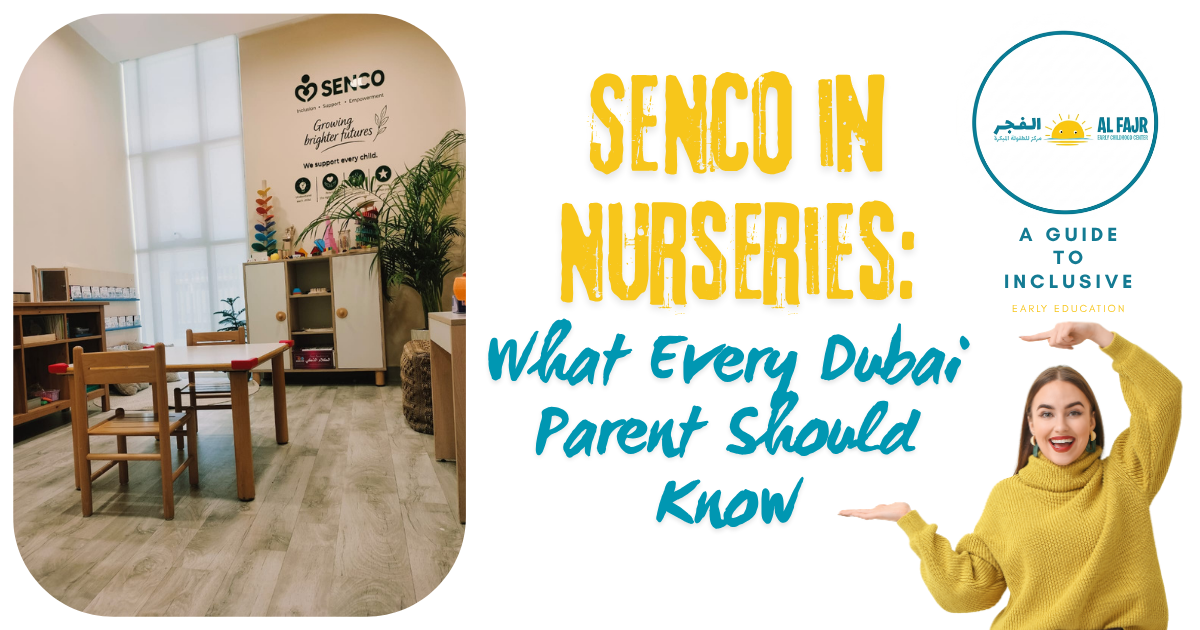
SENCO in Nurseries: What Every Dubai Parent Should Know
If you've come across the term "SENCO" while researching nurseries in Dubai and weren't entirely sure what it meant, you're not alone. It's one of those terms that gets mentioned in nursery brochures and KHDA inspection reports without much explanation — yet it can make a real difference in how well a nursery supports every child, including yours.
Here's a clear, practical breakdown of what a SENCO actually is, why it matters, and what questions are worth asking when you're evaluating nurseries in Dubai.
What Does SENCO Actually Mean?
SENCO stands for Special Educational Needs Coordinator. It's a specific role within a nursery or school responsible for identifying, supporting, and coordinating care for children who may have additional learning, developmental, or behavioral needs — whether that's a diagnosed condition, a developmental delay, or simply a child who needs extra support in a particular area.
A SENCO isn't just there for children with formal diagnoses. Part of their role is also early identification — noticing when a child might benefit from additional support before a formal diagnosis is even in the picture.
Why This Role Matters, Even If Your Child Doesn't Have Additional Needs
It's easy to assume the SENCO role only matters for families whose children have a diagnosed condition. But in reality, a strong SENCO presence benefits every child in a nursery, for a few reasons:
Early identification helps everyone. A SENCO's training means developmental concerns — speech delays, attention difficulties, sensory sensitivities — are noticed and addressed early, rather than overlooked until school age when intervention becomes harder.
It reflects overall staff training quality. Nurseries that invest in a dedicated SENCO role tend to have broader staff training in child development generally, which benefits the classroom as a whole.
It signals genuine inclusivity. A nursery with an active, visible SENCO is usually one that's genuinely equipped to include and support children of varying needs and paces of development, not just academically capable ones.
What a Good SENCO Actually Does
In a well-run nursery, a SENCO's responsibilities typically include:
Working with teachers to identify children who may need additional support
Creating individual support plans tailored to a child's specific needs
Liaising with parents regularly and transparently about a child's progress
Coordinating with external specialists (speech therapists, occupational therapists) when needed
Training and supporting classroom teachers in inclusive teaching strategies
Ensuring the nursery's environment and curriculum can be adapted where necessary
Questions Worth Asking When Nursery Shopping
Whether or not you have specific concerns about your child's development, it's worth asking any nursery you're considering:
Do you have a dedicated SENCO, and how is that role structured?
How does the nursery identify children who might need additional support?
What does the process look like if a concern is raised — by staff or by a parent?
Does the nursery work with external specialists, and how is that coordinated?
How are parents kept informed and involved throughout the process?
The way a nursery answers these questions tells you a lot — not just about their SEN provision, but about their overall approach to individualized care.
What to Look For During a Nursery Visit
Beyond asking direct questions, pay attention to how staff talk about differences in children during a tour. Do they speak about varying paces of development as completely normal and something they actively plan for? Or does the conversation feel like SEN support is an afterthought, something they'd "figure out" only if it came up?
A nursery genuinely equipped for inclusive early education usually has this built into how they describe their everyday approach, not just something mentioned when directly asked.
A Reassuring Note for Parents
If your child has been flagged for a possible developmental concern, or if you simply have a gut feeling that something might need extra attention, know that early years is exactly the right time to have that conversation. Nurseries with strong SENCO support are equipped to work alongside you, not just to identify concerns, but to build a genuinely supportive plan moving forward — often making a meaningful difference well before formal schooling even begins.
Frequently Asked Questions
1. Does every nursery in Dubai have a SENCO?
Not all nurseries have a dedicated, formally trained SENCO. It's worth asking directly, since KHDA inspection standards increasingly emphasize inclusive practice, but the depth of provision still varies significantly between nurseries.
2. What should I do if I suspect my child has a developmental delay?
Raise it directly with your nursery's SENCO or lead teacher. Early identification allows for earlier support, and a good SENCO can help guide next steps, including referrals to specialists if needed.
3. Will my child be treated differently if flagged for additional support?
A well-run inclusive nursery integrates additional support seamlessly into the classroom, so children generally continue participating fully alongside their peers, with adjustments made discreetly and appropriately.
4. How involved are parents in the SEN support process?
Parents should be closely involved at every stage — from initial concerns being raised to ongoing updates about a child's individual support plan. Regular, transparent communication is a hallmark of a strong SENCO program.
5. Is SEN support only for children with formal diagnoses?
No. Much of a SENCO's work involves early support for children showing signs of needing extra help, well before any formal diagnosis is made, since early intervention often leads to better long-term outcomes.

